
Ureter Course In Female Pelvis
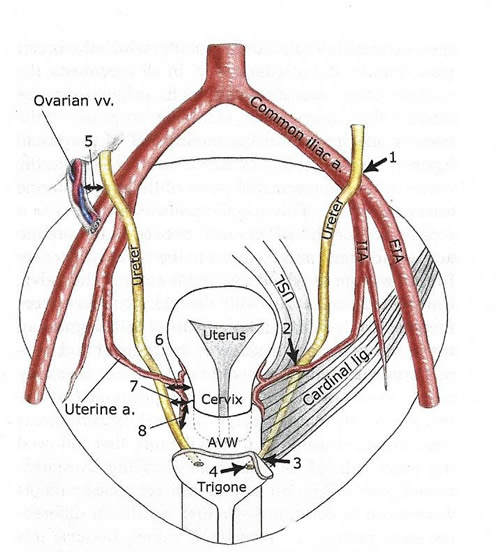
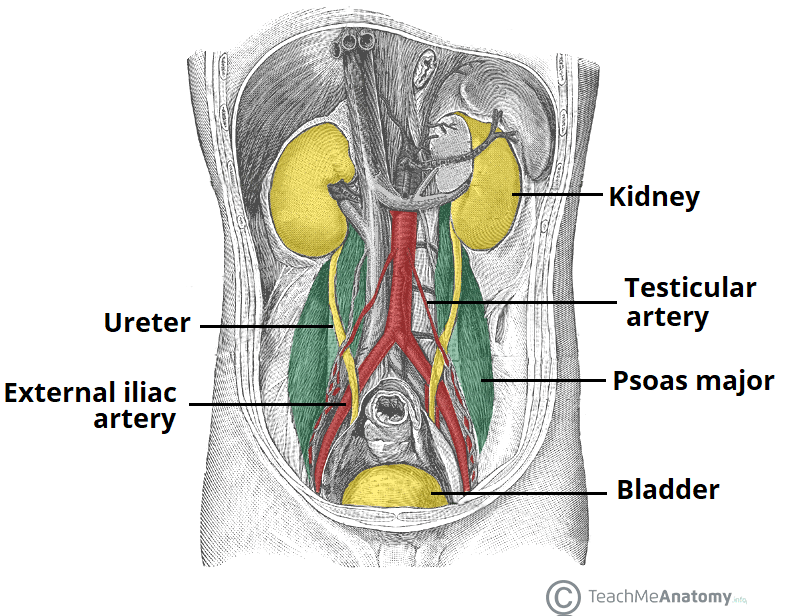
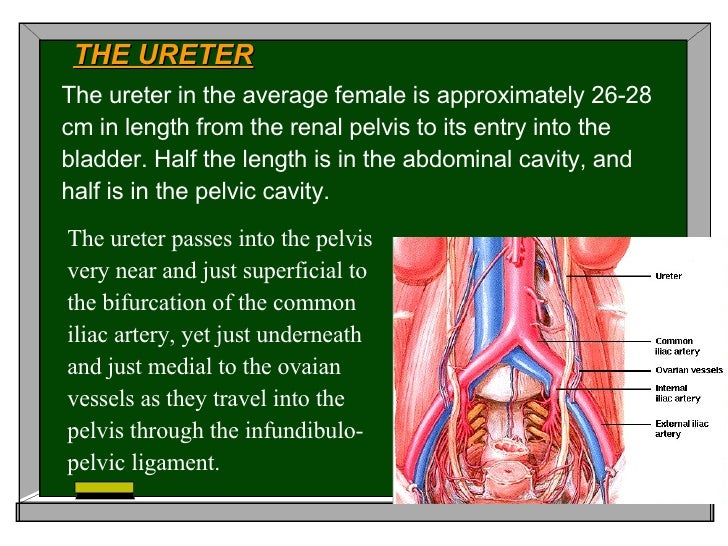
Ureter Course In Female Pelvis - The female urethra starts at the base of the bladder and continues down through the pelvic floor. The upper ureter, zone 1, is the portion extending from the renal pelvis to iliac arteries. It begins at the neck of the bladder, traverses the pelvic and urogenital diaphragms, and ends at the external urethral orifice. In the pelvis, they receive additional branches from the internal iliac, middle rectal, uterine, vaginal, and vesical arteries. From the ischial spine, it turns forwards and medially to reach the superolateral angle of the base of urinary bladder, where it enters the bladder wall. The ureters travel inferiorly from the renal pelvis apices at the kidney hila, pass anterior to the psoas, and course over the pelvic brim at the common iliac artery bifurcation. It is a funnel shape upper expansion of the ureter. In general the ureter is seen crossing the external iliac vessels from lateral to medial at the base of the infundibulopelvic ligaments. In the pelvis, the ureter first runs downward, backward, and laterally along the anterior margin of the greater sciatic notch and reaches the level of ischial spine. The distinguishing feature is that the ureter passes posterior to the vessel. In the majority of the patients, the course of the ureter is easily demarcated from the level of the pelvic brim. Retroperitoneal structure in the posterior abdominal wall (upper part) and lateral pelvic wall. The ureters can be confused with the inferior mesenteric artery. Explore, cut, dissect, annotate and manipulate our 3d models to visualise anatomy in a dynamic, interactive way. The transition of the ureters into the bladder causes the lower physiologic narrowing. From the pelvic brim to the bladder. From there, these muscular tubes travel along the pelvis' lateral wall and connect to the urinary bladder. Opposite to the ischial spine, it turns forwards and medially to get to the base of the urinary bladder, where it enters the bladder wall obliquely. In general the ureter is seen crossing the external iliac vessels from lateral to medial at the base of the infundibulopelvic ligaments. During their course in the abdomen, the ureters receive blood from the gonadal vessels, aorta, and retroperitoneal vessels. The ureters are muscular tubes that run from the kidneys to the urinary bladder. Explore, cut, dissect, annotate and manipulate our 3d models to visualise anatomy in a dynamic, interactive way. Its upper half courses in the abdomen (abdominal part) while its lower half courses in the pelvis (pelvic part). From the ischial spine, it turns forwards and medially to. Kidneys and ureters in cadavers: From the renal pelvis to the pelvic brim. The ureters are two deep tubes that connect the kidneys to the bladder back. From there, these muscular tubes travel along the pelvis' lateral wall and connect to the urinary bladder. About 25 cm (10 inches) diameter: They begin at the ureteropelvic junction, where the renal pelvis continues on as the ureter. In the female the uterine artery also contributes to its vascularization. In the pelvis, they receive additional branches from the internal iliac, middle rectal, uterine, vaginal, and vesical arteries. The ureters are two deep tubes that connect the kidneys to the bladder back. During their. See section trigone of the urinary bladder for the anatomy of the ureteral orifice. In the pelvis, the ureter first runs downward, backward, and laterally along the anterior margin of the greater sciatic notch. Retroperitoneal structure in the posterior abdominal wall (upper part) and lateral pelvic wall. In general the ureter is seen crossing the external iliac vessels from lateral. Explore, cut, dissect, annotate and manipulate our 3d models to visualise anatomy in a dynamic, interactive way. Congenital anomalies of the pelvic ureter important for gynecologist: Kidneys and ureters in cadavers: From there, these muscular tubes travel along the pelvis' lateral wall and connect to the urinary bladder. About 25 cm (10 inches) diameter: Explore, cut, dissect, annotate and manipulate our 3d models to visualise anatomy in a dynamic, interactive way. In the pelvis, the ureter first runs downward, backward, and laterally along the anterior margin of the greater sciatic notch and reaches the level of ischial spine. Its upper half courses in the abdomen (abdominal part) while its lower half courses in the. The ureters travel inferiorly from the renal pelvis apices at the kidney hila, pass anterior to the psoas, and course over the pelvic brim at the common iliac artery bifurcation. They begin at the ureteropelvic junction, where the renal pelvis continues on as the ureter. The female urethra starts at the base of the bladder and continues down through the. (1) ectopic ureter that opens in the vestibule, urethra, vagina or cervix. It begins at the neck of the bladder, traverses the pelvic and urogenital diaphragms, and ends at the external urethral orifice. In the female the uterine artery also contributes to its vascularization. From the renal pelvis to the pelvic brim. About 25 cm (10 inches) diameter: In the female the uterine artery also contributes to its vascularization. It may lie completely outside the kidney or buried inside the substance of the renal hilum. In the female, the ureters pass under the ovarian and uterine vessels. From the renal pelvis to the pelvic brim. In both genders, the ureters enter the bladder wall at an oblique angle. See section trigone of the urinary bladder for the anatomy of the ureteral orifice. It is a funnel shape upper expansion of the ureter. They begin at the ureteropelvic junction, where the renal pelvis continues on as the ureter. Opposite to the ischial spine, it turns forwards and medially to get to the base of the urinary bladder, where it. Gynecologic and urologic surgery is frequently performed using a vaginal or perineal approach. In general the ureter is seen crossing the external iliac vessels from lateral to medial at the base of the infundibulopelvic ligaments. The ureters are two deep tubes that connect the kidneys to the bladder back. Congenital anomalies of the pelvic ureter important for gynecologist: Explore, cut, dissect, annotate and manipulate our 3d models to visualise anatomy in a dynamic, interactive way. The distinguishing feature is that the ureter passes posterior to the vessel. In the pelvis, they receive additional branches from the internal iliac, middle rectal, uterine, vaginal, and vesical arteries. The ureter begins its descent to the bladder by running along the medial aspect of the psoas muscle. See section trigone of the urinary bladder for the anatomy of the ureteral orifice. The ureters travel inferiorly from the renal pelvis apices at the kidney hila, pass anterior to the psoas, and course over the pelvic brim at the common iliac artery bifurcation. The urethra is a fibromuscular tube that conducts urine from the bladder (and semen from the ductus deferens) to the exterior. The ureters can be confused with the inferior mesenteric artery. In both genders, the ureters enter the bladder wall at an oblique angle at the ureterovesical junction (uvj). The ureters are a pair of muscular tubes which convey the urine from kidneys (renal pelvis) to the urinary bladder. In the female, the ureters pass under the ovarian and uterine vessels. Its upper half courses in the abdomen (abdominal part) while its lower half courses in the pelvis (pelvic part).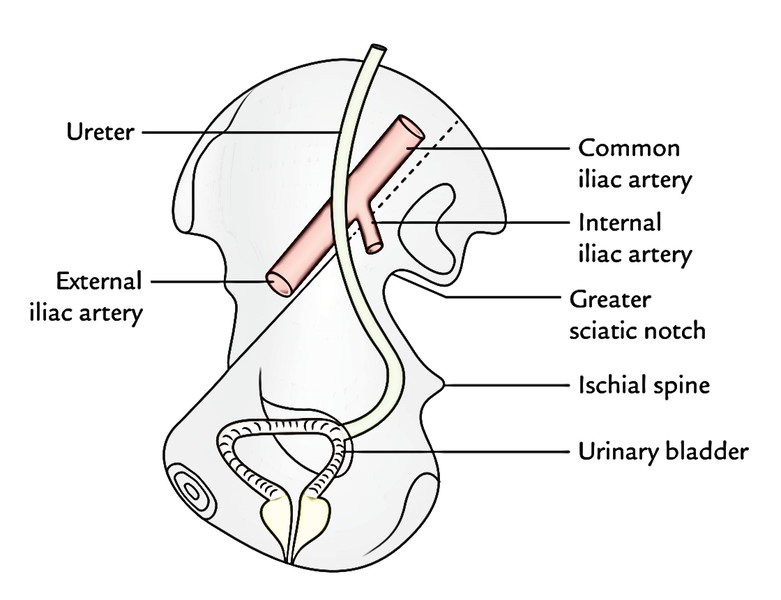
Ureter Earth's Lab
مركز صحة المرأة والتعليم إصابة المسالك البولية الوقاية والإدارة
The Ureters Anatomical Course Neurovascular Supply TeachMeAnatomy

Pelvic ureter
Anatomy2009

Female Pelvic Anatomy Ureter ANATOMY STRUCTURE
Course of pelvic ureters. Taken from [1]. Download Scientific Diagram

Anatomy of the Female Urinary Tract Obgyn Key

Course of ureter female Diagram Quizlet

Cardinal Ligament Ureter
The Transition Of The Ureters Into The Bladder Causes The Lower Physiologic Narrowing.
Additionally, A Child With Dv May Experience Storage Symptoms Such As Frequency And.
(1) Ectopic Ureter That Opens In The Vestibule, Urethra, Vagina Or Cervix.
From The Ischial Spine, It Turns Forwards And Medially To Reach The Superolateral Angle Of The Base Of Urinary Bladder, Where It Enters The Bladder Wall.
Related Post: